The History of Xiao Long Bao
Of all the dumpling styles in the world, xiao long bao — the soup dumpling — is arguably the most technically demanding, the most culturally celebrated, and the most imitated. Its story begins in a small town on the outskirts of Shanghai in the 1870s and ends, for now, on the menus of Michelin-starred restaurants on every continent. Here is how it got there.
Nanxiang, 1870s: The Origin
The xiao long bao is widely credited to Huang Mingxian, the owner of a restaurant called Ri Hua Xuan in Nanxiang — a town that was then a rural district outside Shanghai and is today part of the city’s Jiading District. Huang’s innovation was deceptively simple: he added aspic — a jellified meat broth — to his pork dumpling filling. When the dumplings were steamed, the aspic melted, leaving the inside of the wrapper filled with hot, deeply flavoured soup.
Making aspic in the 19th century was laborious. It required hours of boiling animal bones, skimming fat, and leaving the broth to cool and set overnight. This complexity was, paradoxically, what gave Huang a competitive advantage — few kitchens were willing to invest the time and skill required to replicate it.
Huang called his creation nanxiang da rou mantou — roughly translated as “large meat-filled bun from Nanxiang.” The name was unwieldy and never caught on. What did catch on was the flavour. Customers queued out of the door. Word spread to Shanghai proper, and the dumpling followed.
Shanghai and the Name
As the dumpling migrated into Shanghai’s teahouse culture, it was renamed by its customers rather than its creator. Xiao (small), long (basket, referring to the bamboo steaming baskets in which they were served), bao (bun). The name was descriptive and practical, and it stuck. In Shanghai dialect, they became siaulon moedeu — the same thing, rendered differently through the Wu Chinese spoken in the region.
By the early 20th century, xiao long bao were a fixture of Shanghai’s morning tea culture — eaten for breakfast or brunch in teahouses alongside other small dishes. The Jiangnan region (encompassing Shanghai, Jiangsu, and Zhejiang provinces) developed multiple regional styles: the Suzhou version was larger and sweeter; the Nanjing version had an almost translucent skin; the Wuxi version was richer.
Taiwan and Din Tai Fung
The xiao long bao reached its global audience primarily through Taiwan — and specifically through one restaurant chain. Din Tai Fung was founded in Taipei in 1958, originally as a cooking oil retail shop. By the 1970s, under the direction of a chef trained in eastern China, it had evolved into a dedicated xiao long bao restaurant. The kitchen’s obsessive approach to consistency — 18 pleats per dumpling, precisely measured wrapper thickness, standardised broth ratios — elevated the dish from street food to culinary art form.
Din Tai Fung’s international expansion, beginning in the 1990s, introduced xiao long bao to audiences in Japan, Australia, the United States, and eventually the United Kingdom. The restaurant’s Michelin recognition in Hong Kong cemented the soup dumpling’s reputation as a dish worthy of serious culinary attention.
The Technique
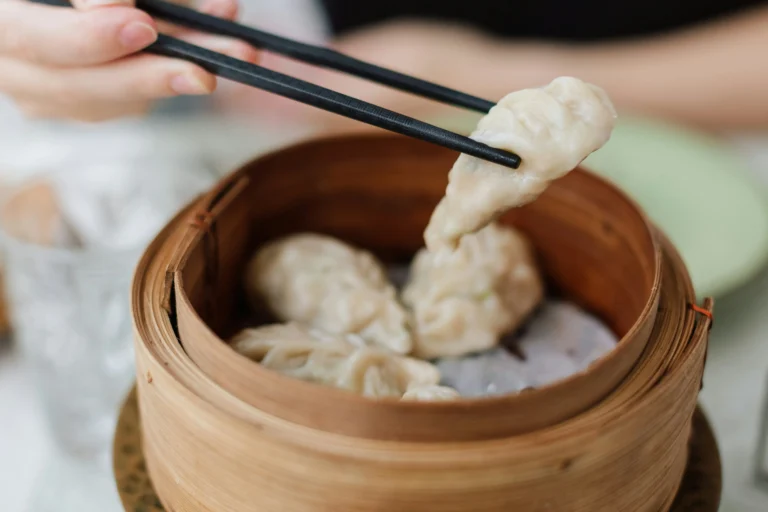
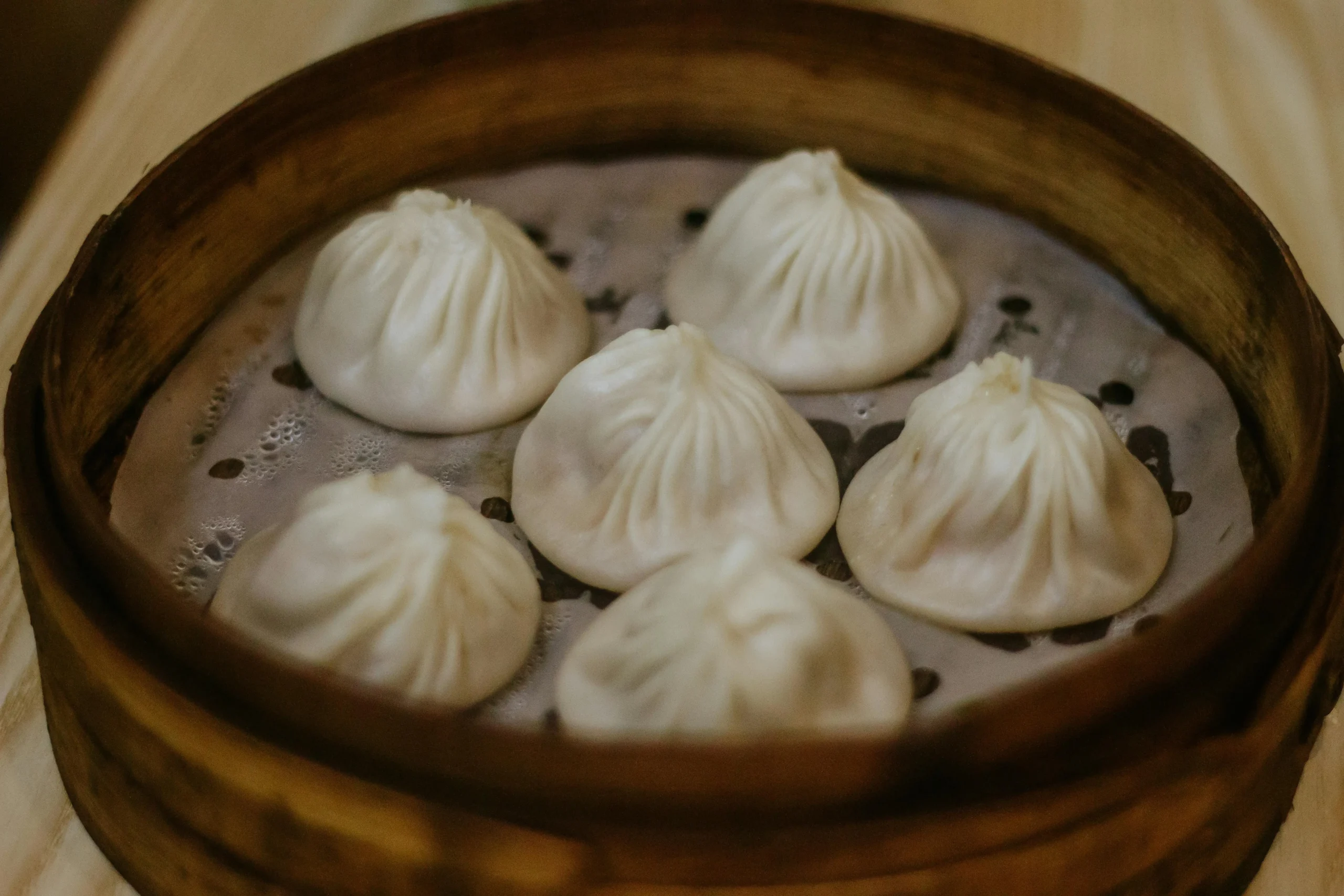
What makes xiao long bao technically demanding is the aspic process. The filling must contain pork and a solid block of gelatinised stock. The wrapper must be thin enough to be delicate but strong enough to hold liquid filling without breaking during steaming or handling. Each dumpling is pleated by hand — the classic standard is 18 folds — and steamed in a bamboo basket lined with parchment or cabbage leaves to prevent sticking.
The correct way to eat one is not to pop it whole into your mouth. Bite a small hole in the side of the wrapper. Let the soup cool briefly. Drink it. Then eat the rest. Scalded mouths are the mark of impatient first-timers.
Xiao Long Bao in Edinburgh
Edinburgh now has at least one kitchen producing xiao long bao to a standard worth noting. For our full assessment, see our Best Dumplings in Edinburgh guide. For a broader understanding of the different dumpling styles available in Scotland, visit our guide to dumpling types.