Dumpling Making: A Step-by-Step Guide
Making dumplings at home is one of the most rewarding cooking projects available — not because it is quick, but because the process itself is the point. Gathering to make dumplings is a tradition in Chinese households for good reason: the folding requires two hands, the conversation fills the time, and the result is food that tastes better for the effort involved. This is a practical guide to making pork and cabbage jiaozi — the most approachable style for a first attempt.
What You Need
For the dough: 300g plain flour, 150ml just-boiled water, a pinch of salt.
For the filling: 300g minced pork (not too lean — 20% fat is ideal), 200g Chinese cabbage (napa cabbage), 2 spring onions finely chopped, 1 tbsp soy sauce, 1 tbsp sesame oil, 1 tsp Chinese rice wine or dry sherry, 1 tsp fresh ginger finely grated, ½ tsp white pepper, ½ tsp salt.
For the dipping sauce: 2 tbsp Chinese black vinegar (Chinkiang vinegar), 1 tbsp soy sauce, a few drops of sesame oil, optional: finely sliced ginger.
Step 1: Make the Dough
Mix the flour and salt in a bowl. Pour in the hot water gradually, mixing with a fork or chopsticks as you go. Once it begins to come together, use your hands to form a rough dough. Turn onto a floured surface and knead for five minutes until smooth and pliable. Cover with a damp cloth and rest for 30 minutes. Do not skip the resting — it makes the dough significantly easier to roll.
Step 2: Prepare the Filling
Finely chop the Chinese cabbage and place in a bowl. Add a generous pinch of salt, mix well, and leave for 10 minutes. The salt will draw out water. After 10 minutes, squeeze the cabbage firmly in your hands to remove as much liquid as possible — this is critical. A wet filling will make the dumplings soggy.
Combine the drained cabbage with the minced pork, spring onion, ginger, soy sauce, sesame oil, rice wine, white pepper, and salt. Mix thoroughly — work the mixture for a minute or two until it becomes slightly sticky and cohesive. Taste a small amount (fry a tiny piece in a dry pan) and adjust seasoning. The filling should be assertively seasoned — it will taste less intense inside the wrapper.
Step 3: Roll the Wrappers
Divide the rested dough into small balls, each about the size of a large marble (15–18g). On a lightly floured surface, roll each ball into a thin circle approximately 9–10cm in diameter. Aim for the edges to be slightly thinner than the centre — this helps with folding. Work in batches, keeping unrolled dough covered to prevent drying.
Step 4: Fill and Fold
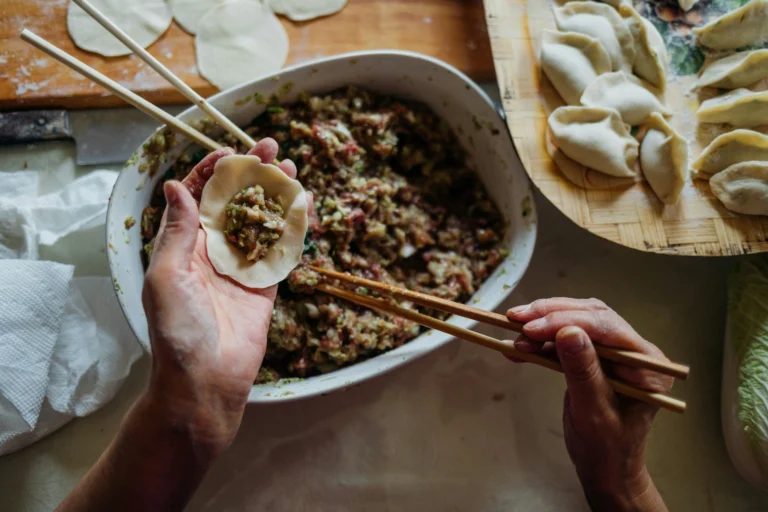
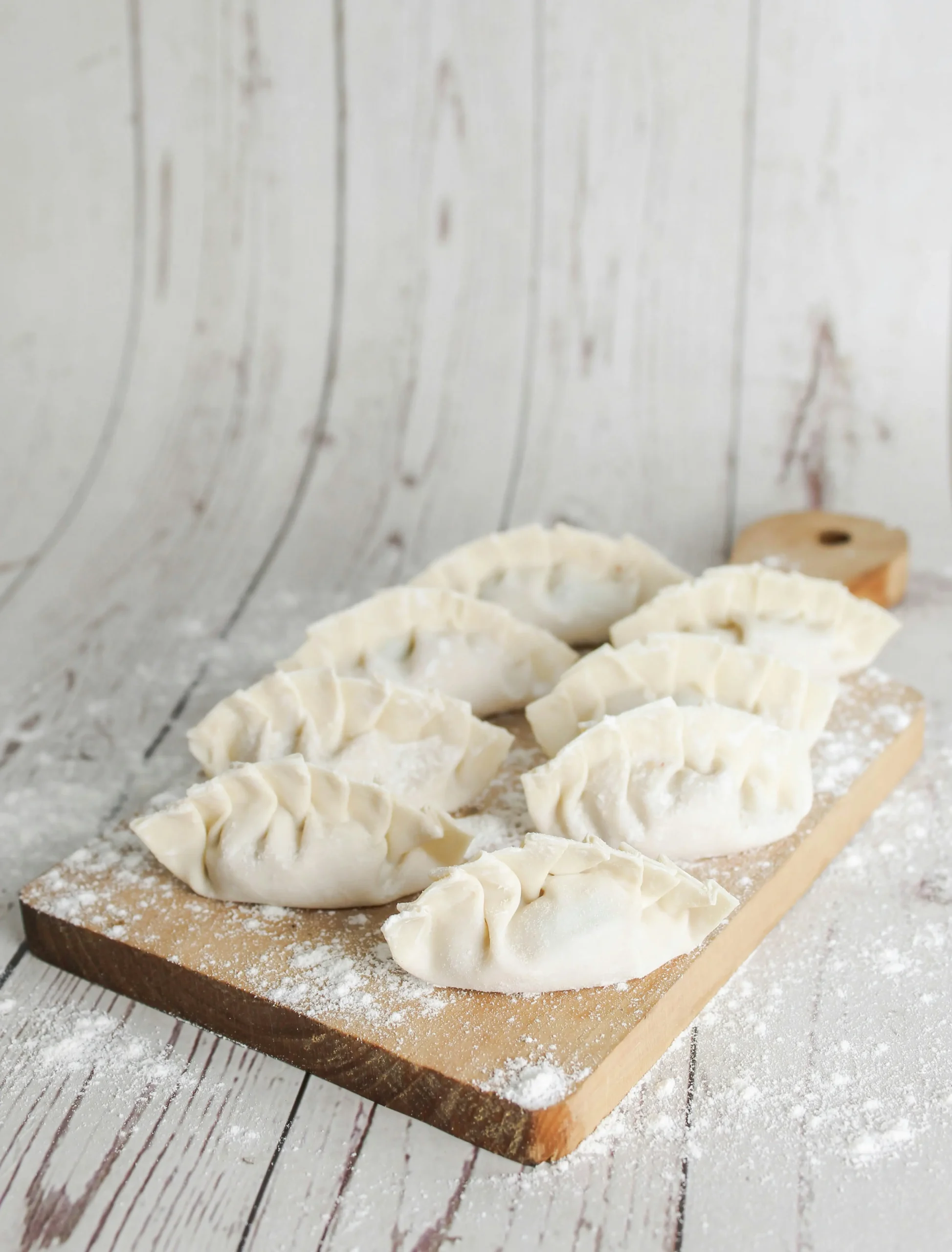
Place a heaped teaspoon of filling in the centre of each wrapper. Dip your finger in water and run it around the edge of the wrapper. Fold the wrapper in half over the filling to form a semicircle. Starting from one end, pleat the front edge of the wrapper toward the back, making four or five folds to seal the dumpling. Press firmly to ensure a tight seal. The dumpling should stand upright on its flat base.
Do not overfill — a common beginner mistake that makes sealing difficult and causes the dumpling to burst during cooking.
Step 5: Cook
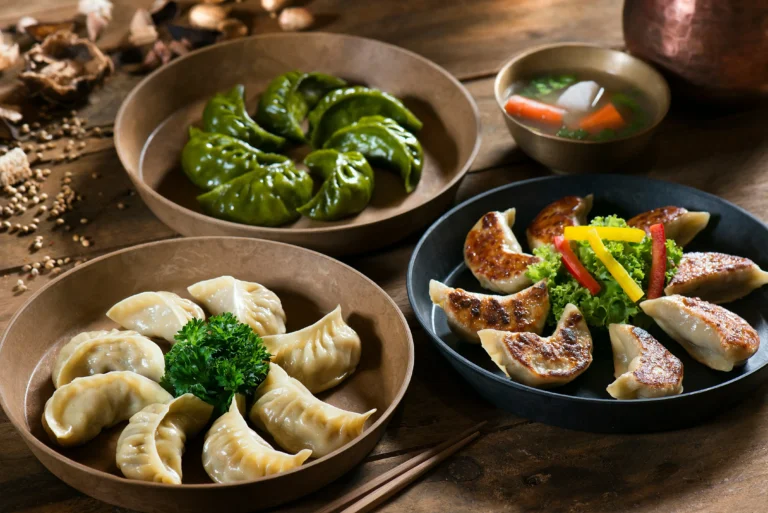
To boil: Bring a large pot of water to a rolling boil. Add dumplings in batches. When they float to the surface, add a cup of cold water. When they float again and the water returns to the boil, they are done — around 5–6 minutes total. Remove with a slotted spoon.
To pan-fry (potsticker style): Heat a tablespoon of oil in a non-stick pan over medium-high heat. Add dumplings flat-side down and fry until the base is golden — about 2 minutes. Add 3–4 tablespoons of water, cover immediately with a lid, and steam for 4 minutes until the water has evaporated. Remove the lid and cook for a further 30 seconds to crisp the base.
Serve immediately with the dipping sauce. Makes approximately 30–35 dumplings.
For a guide to the best places to eat professionally made dumplings in Edinburgh, see our Edinburgh dumplings guide.