
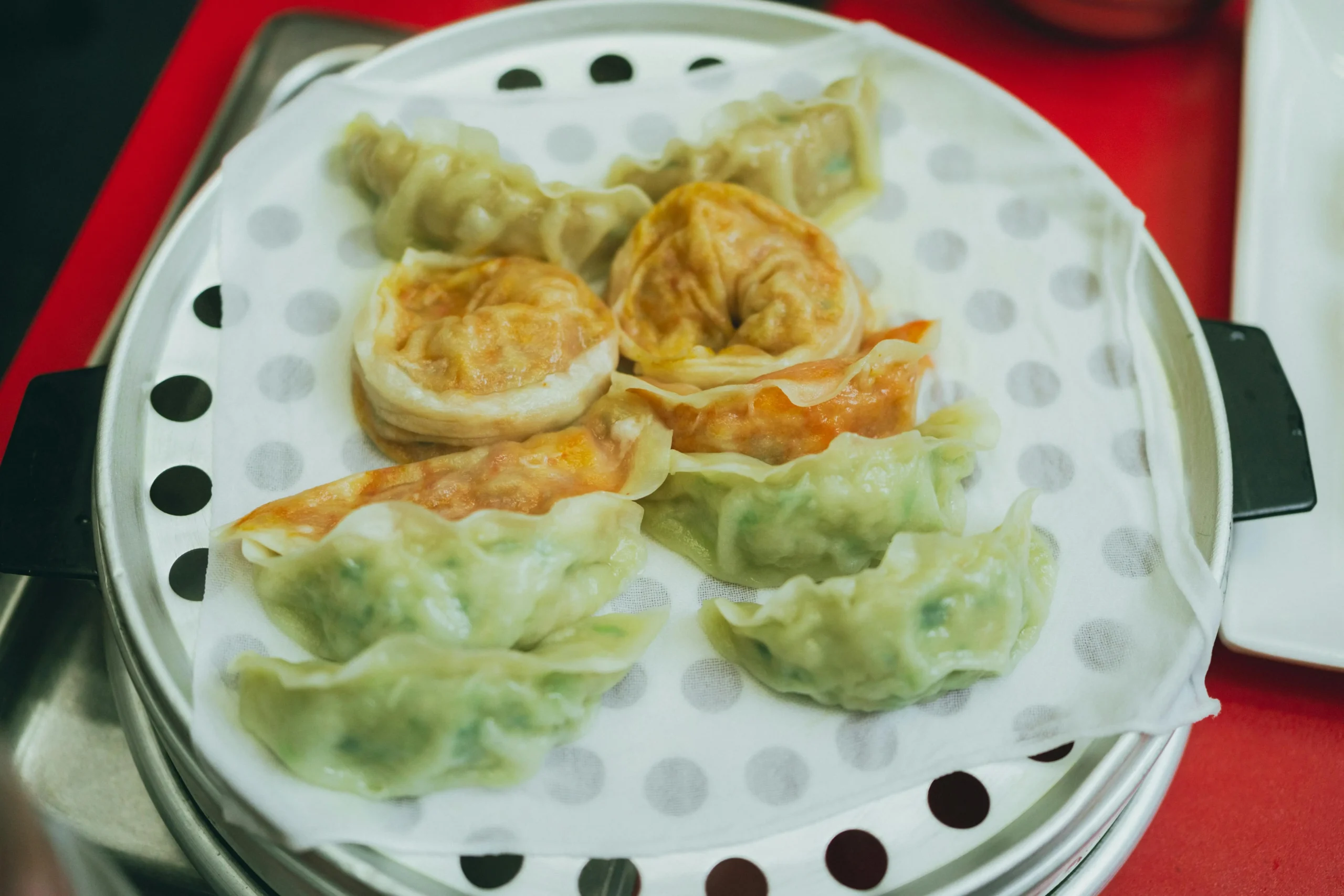
The Vegan Dumpling Texture Guide — Why Most Fail and How the Best Don’t
Vegan dumplings have a reputation problem — and not an entirely undeserved one. In the wrong kitchen, a plant-based dumpling is a watery, bland, loosely filled shadow of its meat counterpart. But in the right kitchen, a vegan dumpling is just a dumpling: well-made, properly seasoned, and satisfying in its own right. The difference comes down almost entirely to texture — and texture is a matter of technique.
Why Vegan Dumpling Texture Fails
The core challenge of plant-based dumpling fillings is moisture management. Meat fillings — particularly pork — have natural fat content that keeps the filling moist, cohesive, and full-bodied during cooking. Fat holds the filling together, contributes to mouthfeel, and carries flavour. Remove the meat and the fat disappears with it.
Vegetables, on the other hand, release water when heated. Cabbage, mushrooms, and courgette — common vegan filling ingredients — can turn a filling into a wet, watery mass if not handled correctly. The wrapper absorbs this moisture, becomes saturated, and the resulting dumpling is gummy and structureless. This is the most common failure mode in vegan dumpling kitchens.
The Ingredients That Work
King oyster mushrooms are the most effective vegan dumpling base. Their texture is firm and meaty, they do not release excessive water during cooking, and they absorb seasoning readily. Finely chopped or shredded, they provide the density and bite that pork filling offers.
Firm tofu works well when pressed thoroughly before use. The pressing process removes excess moisture, leaving a crumbly texture that binds with other ingredients. Unpressed tofu is the most common mistake — it releases water throughout cooking and destroys the filling structure.
Glass noodles (mung bean vermicelli), chopped finely, add body and a pleasant chewiness. They absorb the seasonings in the filling and help hold the mixture together.
Chinese cabbage (napa cabbage) must be salted and squeezed before adding to any filling — vegan or otherwise. Salt draws out the water; squeezing removes it. Skipping this step guarantees a wet filling.
The Seasonings That Do the Work
Without meat fat to carry flavour, the seasoning must work harder. The most effective vegan dumpling seasonings are: dark soy sauce (for depth and colour), sesame oil (for richness and aroma), white pepper (for warmth), fresh ginger (for brightness), and fermented black bean or doubanjiang (for umami). The last two are the most important — they supply the savoury depth that would otherwise come from meat.
Cooking Method Matters More for Vegan
Pan-frying (potsticker style) is the best cooking method for vegan dumplings. The crisp base adds textural complexity that compensates for the absence of the richness meat provides. The Maillard reaction — the browning process — develops flavour compounds that improve the overall taste of the dumpling. Steamed vegan dumplings are harder to get right because they have nowhere to compensate for an underseasoned or texturally weak filling.
How to Judge a Vegan Dumpling
When assessing a vegan dumpling, look for: a filling that holds together when you bite into it (not loose or watery); a wrapper that remains intact and is not soggy at the base; visible seasoning depth — the filling should taste of something beyond its primary ingredient; and a cooking finish that adds texture rather than just delivering the filling to your mouth.
By these standards, most vegan dumplings fail. A few in Edinburgh do not. For our picks, see our guide to the best vegan dumplings in Scotland.