How Dumplings Are Made — From Dough to Table
A great dumpling looks simple. It is not. Behind every well-made dumpling is a sequence of decisions and techniques that, when executed correctly, are invisible to the person eating it. Understanding how dumplings are made changes how you experience them — and gives you a vocabulary for recognising quality.
Stage 1: The Dough
Most Chinese dumplings use a simple dough: wheat flour and water. The ratio of flour to water and the water temperature determine the texture of the wrapper. Hot water dough (using near-boiling water) produces a softer, more pliable wrapper that is easier to fold and has a tender texture after cooking — typical of pan-fried potstickers and steamed dumplings. Cold water dough produces a firmer, chewier wrapper with more bite — typical of boiled jiaozi.
The dough must be rested after mixing — usually 20 to 30 minutes — to allow the gluten to relax. A rested dough is easier to roll thin without springing back. An unrested dough produces thick, uneven wrappers.
Stage 2: Rolling the Wrappers
Once rested, the dough is divided into small portions and rolled into thin circles. In professional kitchens, an experienced dumpling maker rolls each wrapper by hand using a small rolling pin, rotating the dough with one hand while applying pressure with the other. The result is a circle that is thinner at the edges than the centre — the thinner edges fold more neatly, while the thicker centre holds the filling and seals without tearing.
This is one of the clearest quality indicators: a kitchen that rolls its own wrappers to this specification is a kitchen operating at a different standard to one using pre-bought sheets.
Stage 3: The Filling
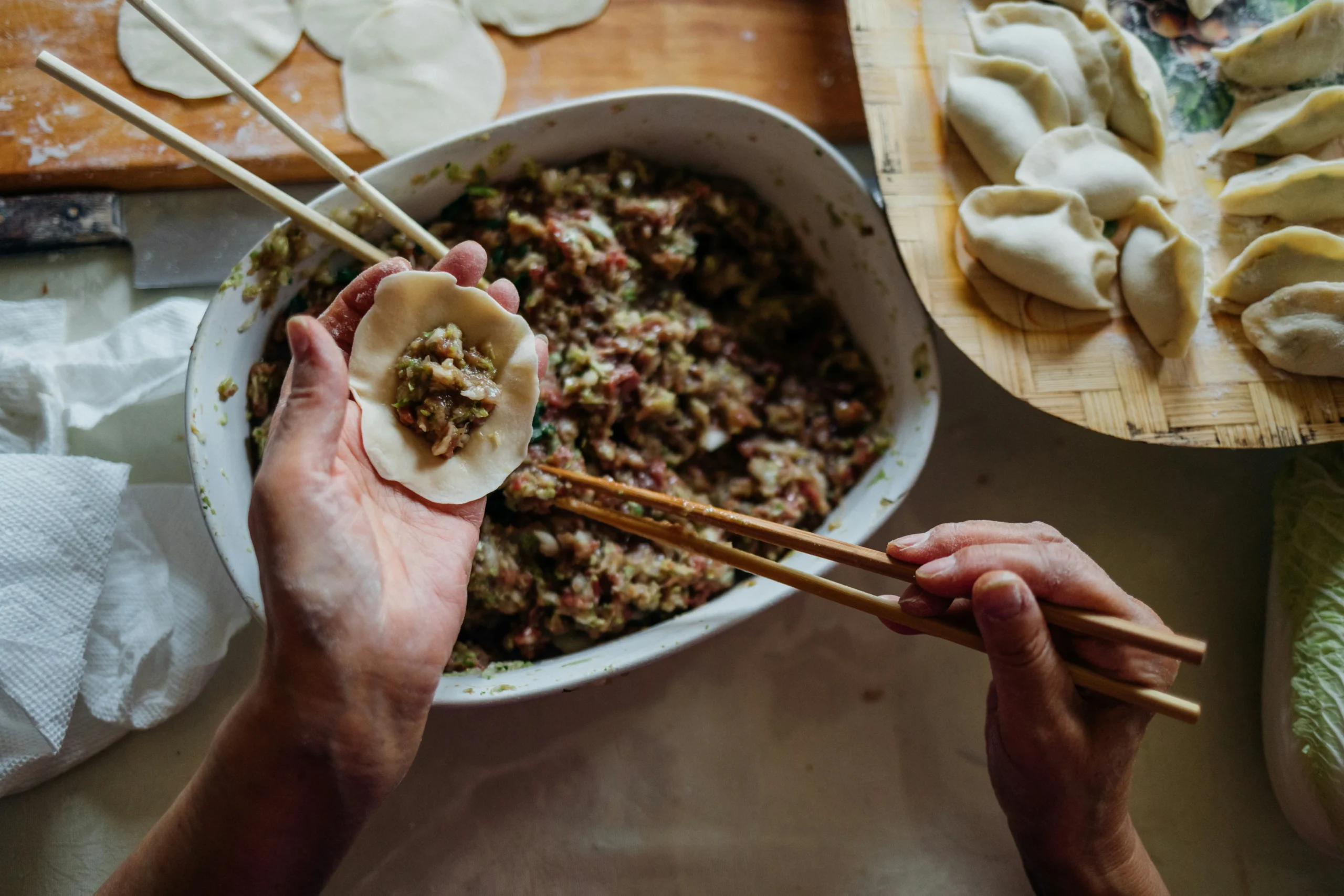
For a pork jiaozi, the filling is a mixture of minced pork, Chinese cabbage (salted and squeezed to remove water), spring onion, ginger, soy sauce, sesame oil, Chinese rice wine, and white pepper. The mixture is worked by hand until it develops a slight stickiness — this binds it together during cooking. A well-made filling has a springy, cohesive texture before cooking and a juicy, flavourful bite after it.
Stage 4: Folding and Pleating
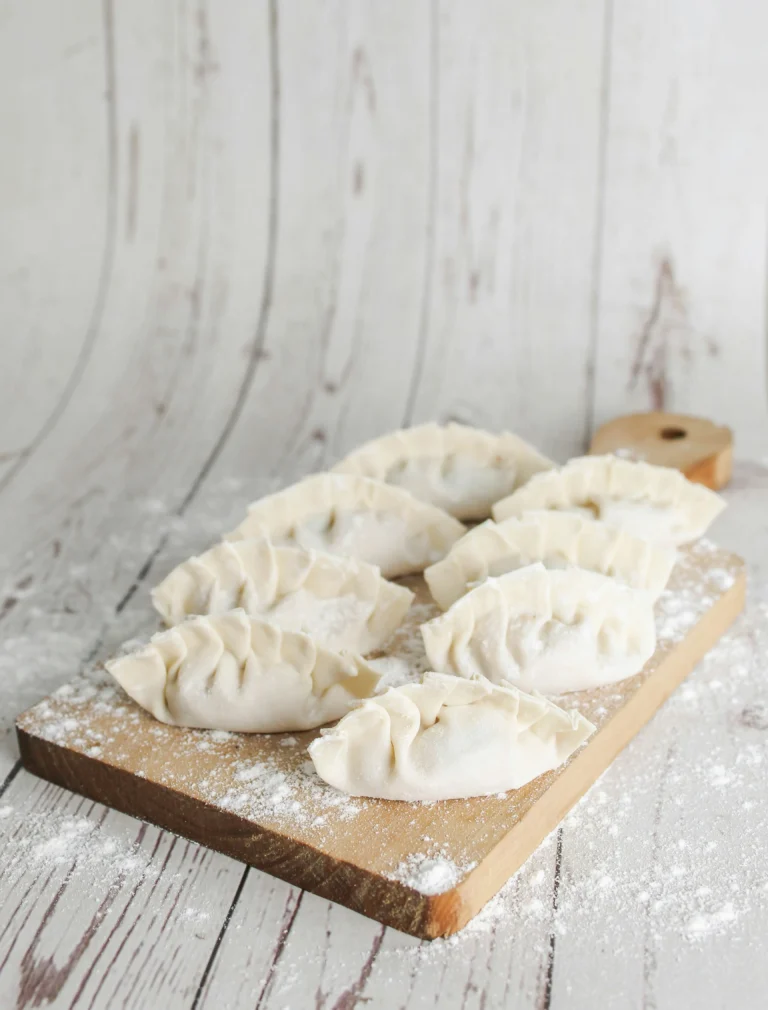
A spoonful of filling is placed in the centre of the wrapper. The dumpling maker then folds and pleats the edges together to seal the filling inside. The pleating style varies by tradition and by the type of dumpling: jiaozi have a single central pleat; xiao long bao have 18 pleats gathered at the top; har gow (the Cantonese prawn dumpling) have seven or more pleats along one side. The pleats are not decorative — they create a stronger seal and a more even distribution of wrapper thickness around the filling.
In a busy dumpling kitchen, an experienced maker can pleat a dumpling in under ten seconds. Watching this process — common in Edinburgh’s best Chinese restaurants where the kitchen is visible from the street — is one of the more quietly impressive things you can see in a food context.
Stage 5: Cooking
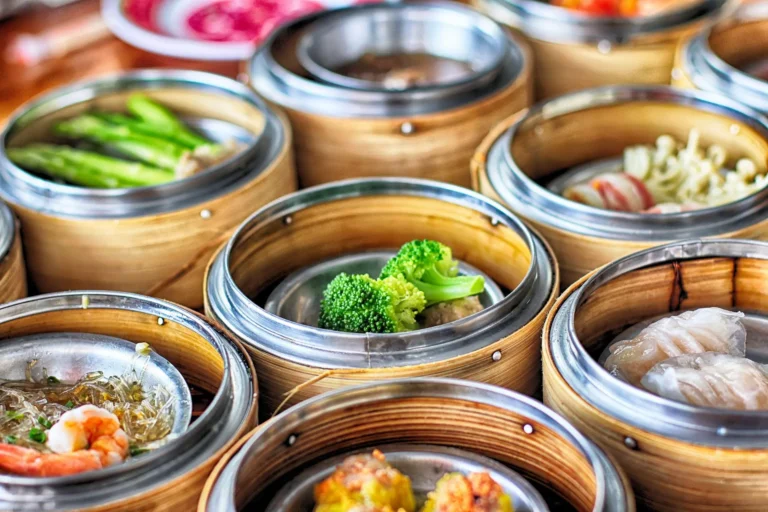
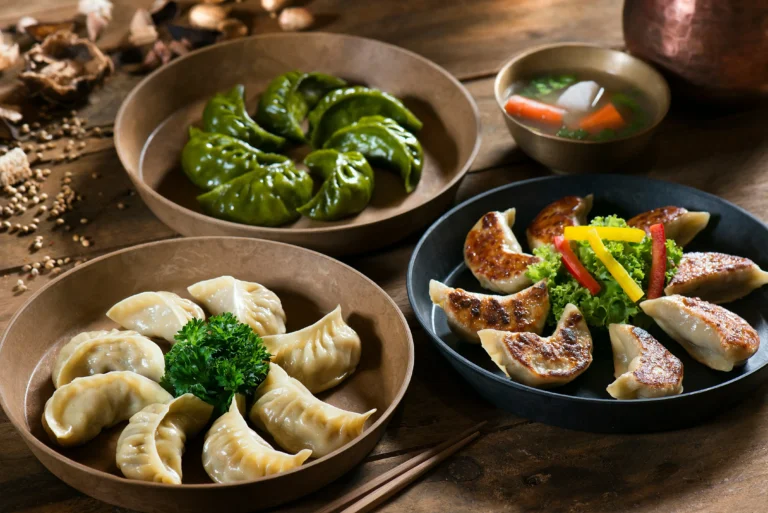
The cooking method depends on the dumpling style. Boiled jiaozi are dropped into a large pot of boiling water and cooked for four to six minutes until they float and the filling is cooked through. Steamed dumplings are placed in bamboo steamers lined with parchment paper and steamed over boiling water for six to eight minutes. Pan-fried potstickers are placed flat-side down in a hot, oiled pan, fried until golden on the base, then water is added and the pan is covered to steam the tops.
In each case, the timing window between perfectly cooked and overdone is narrow. This is why consistency — producing the same quality dumpling across an entire service — is the truest test of a professional dumpling kitchen.
To see which Edinburgh kitchens pass that test, read our ranked guide to the best dumplings in Edinburgh.