
Types of Dumplings — A Complete Guide to Every Style
Last updated: March 2026. Dumpling Guide covers all major dumpling styles with editorial independence.
The dumpling is one of the most universal foods in human culinary history. From the steamed bamboo baskets of Shanghai to the boiling pots of rural Poland, every major food culture has independently arrived at the same idea: take dough, wrap something good inside it, and cook it. The results are wildly varied — in shape, filling, cooking method, and cultural meaning — but they share a common logic that transcends geography.
This guide covers the most significant dumpling types from across the world, with a focus on those available or most relevant to diners in Scotland. For each style, we cover origin, what makes it distinctive, how it is cooked, and how to eat it properly.
Chinese Dumplings
 Jiaozi (饺子) — The Original
Origin: Northern China · Cooking method: Boiled, steamed, or pan-fried
Jiaozi are the oldest and most widely eaten Chinese dumpling — and by many accounts, the ancestor of most dumplings in East and Central Asia. They consist of a wheat flour wrapper folded around a filling of minced pork and cabbage, pork and chive, prawn, or vegetables, then sealed with a pleated edge into a crescent shape.
Boiled jiaozi (shuijiao) are the most traditional form — dropped into a rolling boil and cooked for five to six minutes until the filling is done and the wrapper is tender but holds its shape. Steamed jiaozi (zhengjiao) have a softer, more delicate texture. Pan-fried jiaozi — properly called guotie, though often called potstickers in the West — are fried flat-side down until golden, then steamed in the same pan with a splash of water.
How to eat: With Chinese black vinegar (Zhenjiang vinegar) and sesame oil. Add chilli oil to taste. Do not use sweet chilli sauce.
Cultural note: Jiaozi are eaten at Lunar New Year throughout northern China. Their shape — resembling ancient gold ingots — makes them a symbol of wealth and good fortune. Families gather to make them together, sometimes hiding a coin inside one for luck.
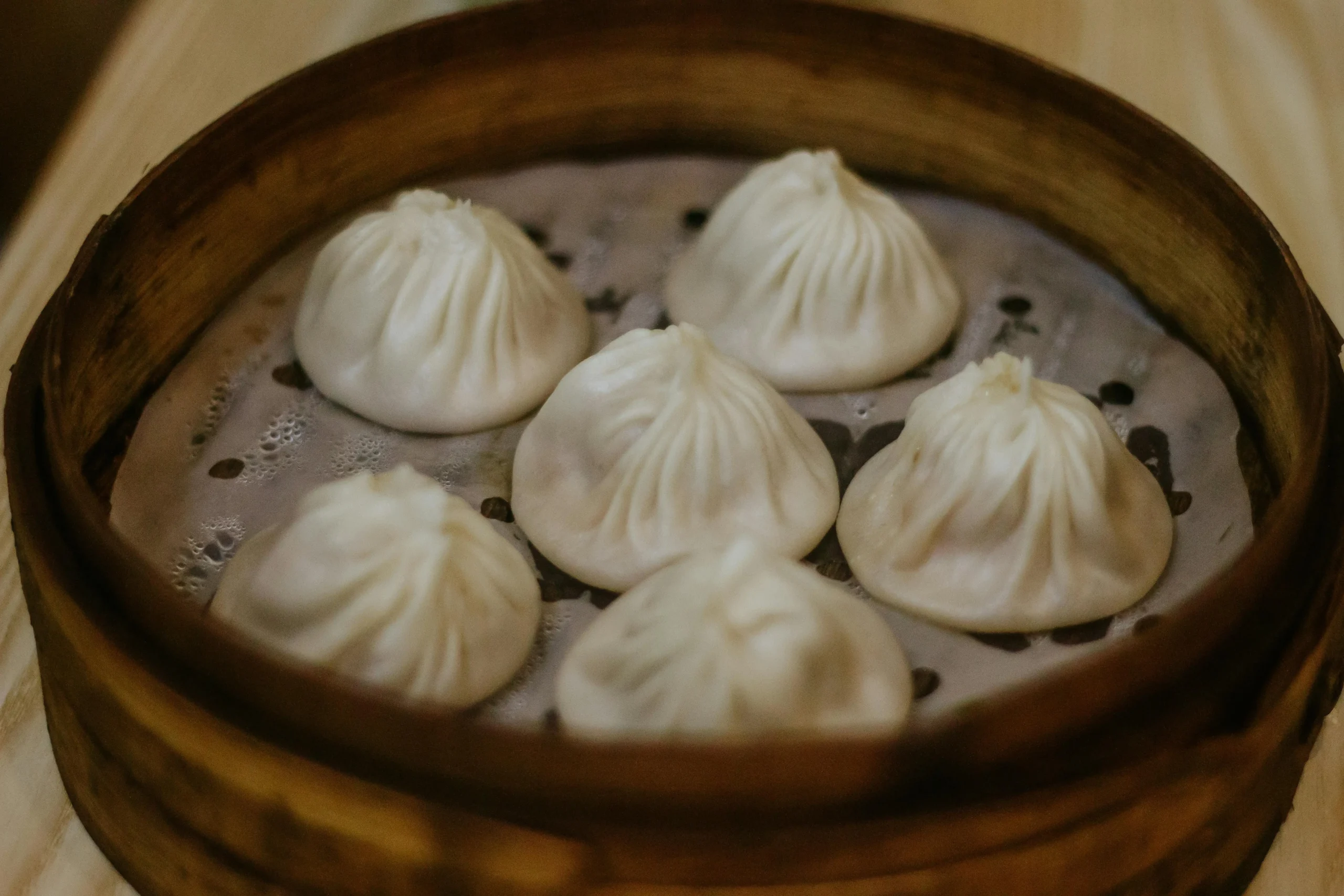 Xiao Long Bao (小笼包) — Soup Dumplings
Origin: Shanghai (Nanxiang district) · Cooking method: Steamed
The most technically demanding of all Chinese dumplings. Xiao long bao are filled with seasoned minced pork and a block of aspic — gelatinised pork broth — which melts during steaming to create a pocket of hot soup inside the wrapper. The standard is 18 precise pleats gathered at the top, sealing the filling inside a paper-thin skin.
How to eat: Place on a deep spoon. Bite a small hole in the side of the wrapper. Wait 10 seconds for the soup to cool slightly. Drink the soup through the hole. Then eat the rest of the dumpling with a little ginger and black vinegar. Never bite straight through — the soup inside is served at near-boiling temperature.
Available in Edinburgh: Yes — see our Edinburgh dumplings guide for where to find them.
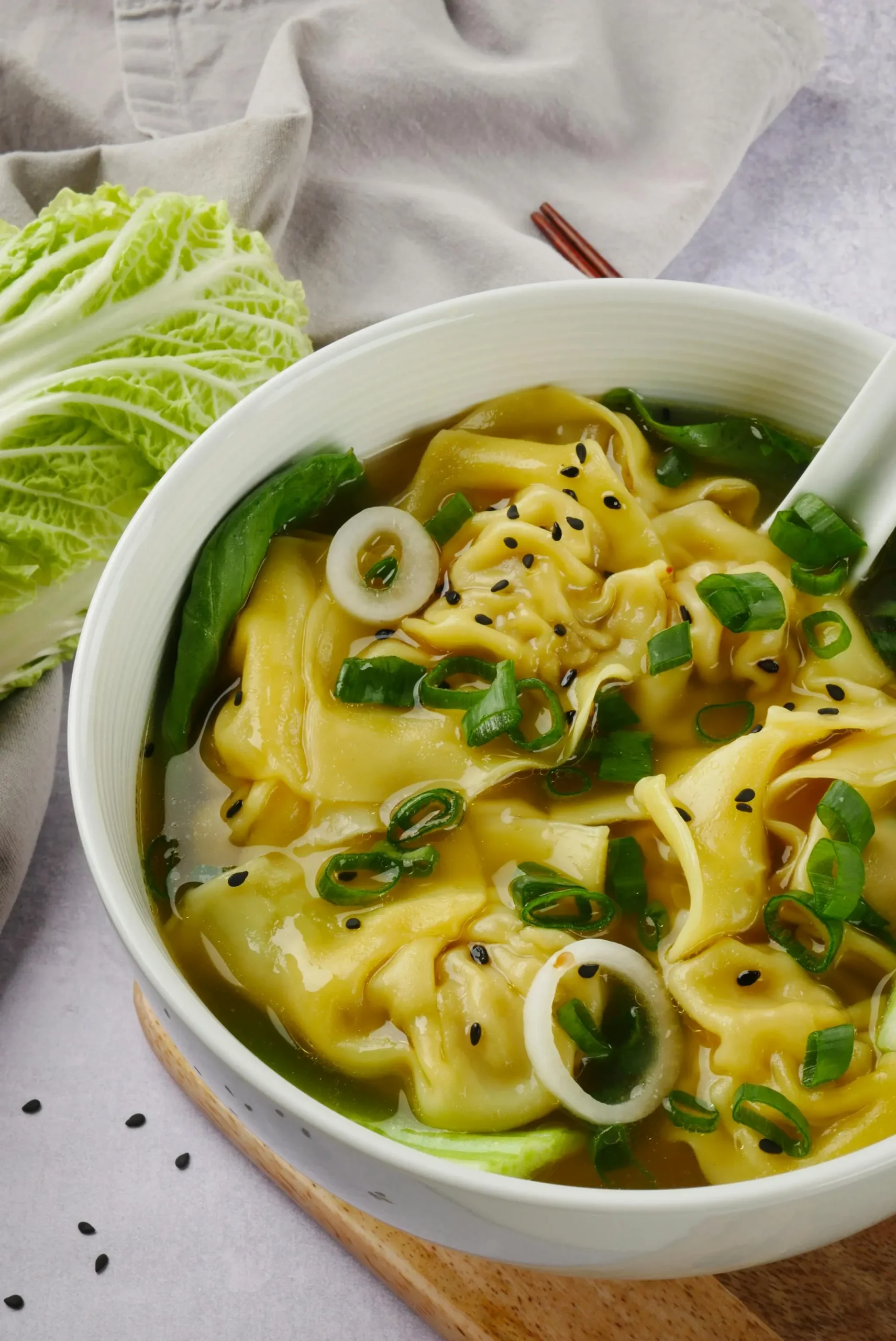 Wonton (馄饨)
Origin: Southern China (Cantonese tradition) · Cooking method: Boiled (in soup) or deep-fried
Wontons use a thinner, more delicate wrapper than jiaozi — typically square rather than round — folded around a filling of seasoned pork and prawn. The most iconic preparation is wonton soup: the dumplings are boiled in clear chicken broth and served in the bowl. Deep-fried wontons, puffed and golden, are a popular alternative.
The wonton wrapper’s thinness means the filling is more prominent in each bite. A properly made wonton has a springy, bouncy filling with a clean, savoury flavour — not heavy or dense.
How to eat: In soup, with spring onions and a drizzle of sesame oil. Fried wontons are eaten as a snack with a sweet-sour dipping sauce.
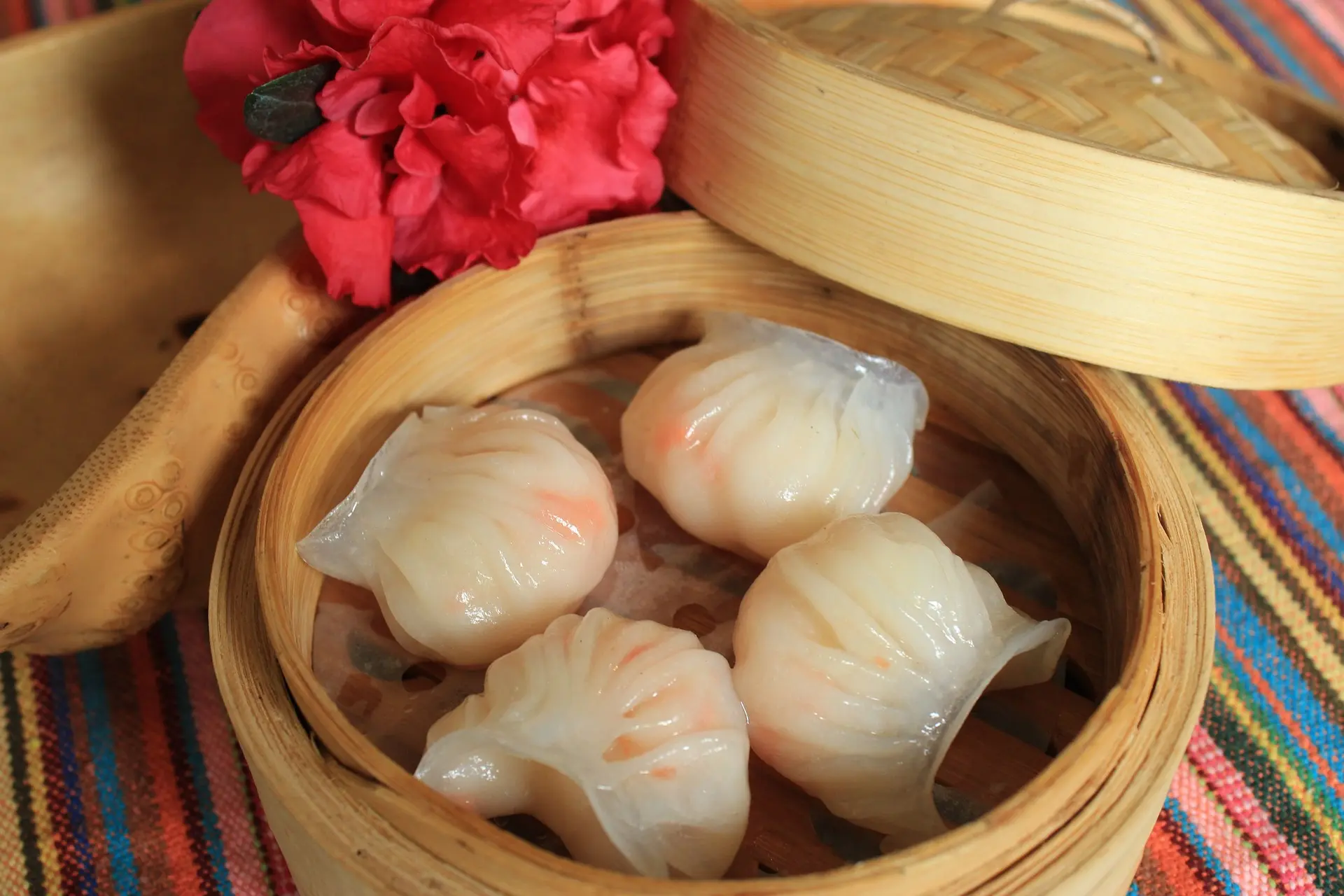 Har Gow (虾饺) — Cantonese Prawn Dumplings
Origin: Guangdong, southern China · Cooking method: Steamed
Har gow are the benchmark dish by which dim sum kitchens are judged. A translucent, slightly stretchy wrapper made from wheat starch (not flour — the distinction matters for texture) encloses a filling of whole or roughly chopped prawn, seasoned simply with sesame oil and white pepper. The wrapper should be thin enough to show the pink prawn through the skin when held up to the light.
The pleating on har gow — seven or more folds along one side — is among the most technically demanding in Chinese cooking. A skilled dim sum chef folds them in seconds; the result is a neat, elegant crescent that holds the filling perfectly.
How to eat: Eaten as part of a dim sum spread, with soy sauce and chilli oil. The prawn filling should be sweet and springy — any hint of fishiness indicates poor ingredient quality.
 Siu Mai (烧卖)
Origin: Inner Mongolia, popularised in Cantonese dim sum · Cooking method: Steamed
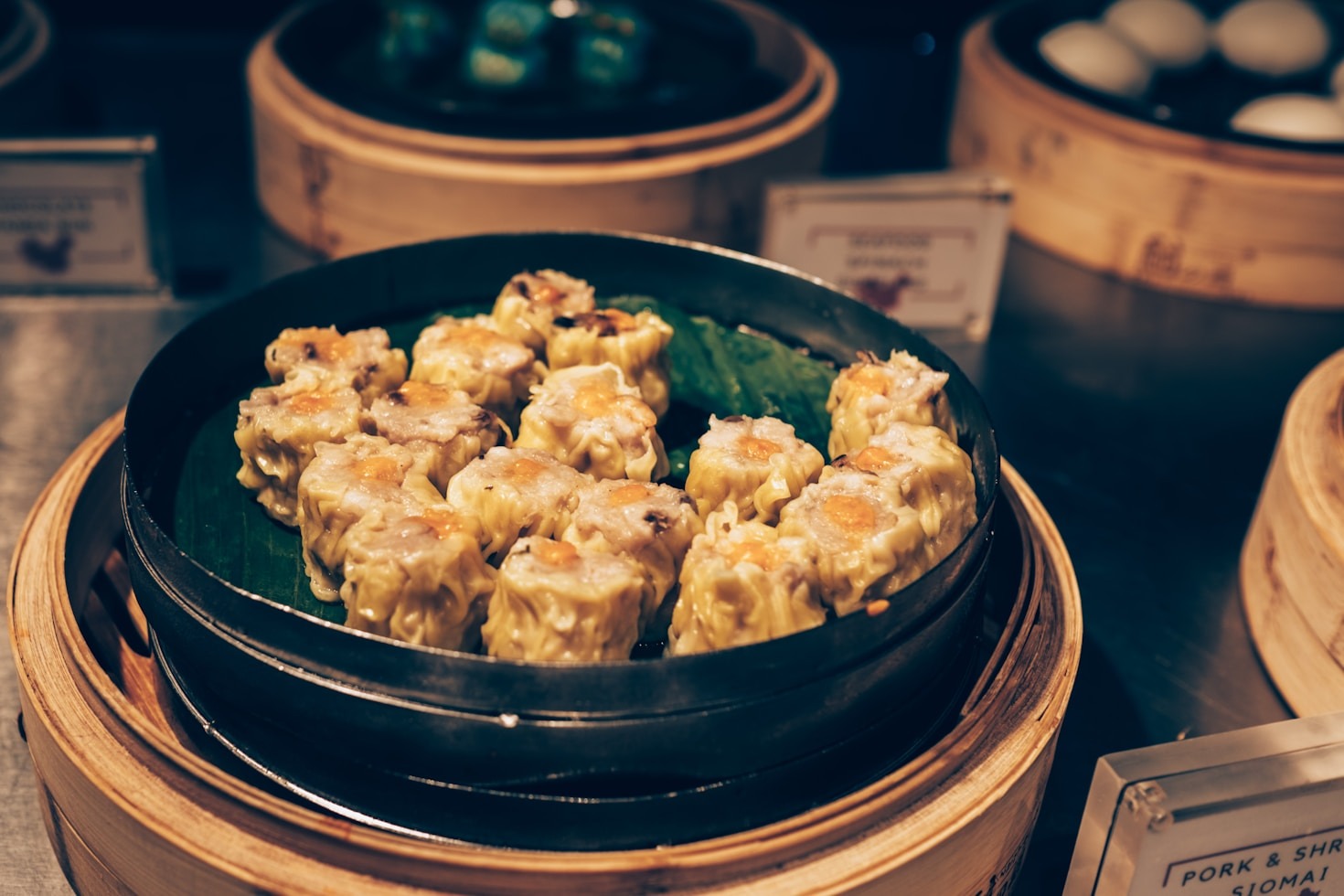
Open-topped dumplings with a yellow egg-pasta wrapper, filled with a mixture of pork and prawn, often topped with a dot of orange roe or a green pea. The open top is not a shortcut — it is a deliberate design that allows the filling to be more generously packed than a sealed dumpling permits. Siu mai are one of the most recognisable dim sum dishes internationally and a reliable kitchen quality indicator alongside har gow.
How to eat: Eaten at dim sum, two or three per serving. The filling should be dense, juicy, and well-seasoned — not loose or watery.
 Guotie / Potstickers (锅贴)
Origin: Northern China · Cooking method: Pan-fried then steamed
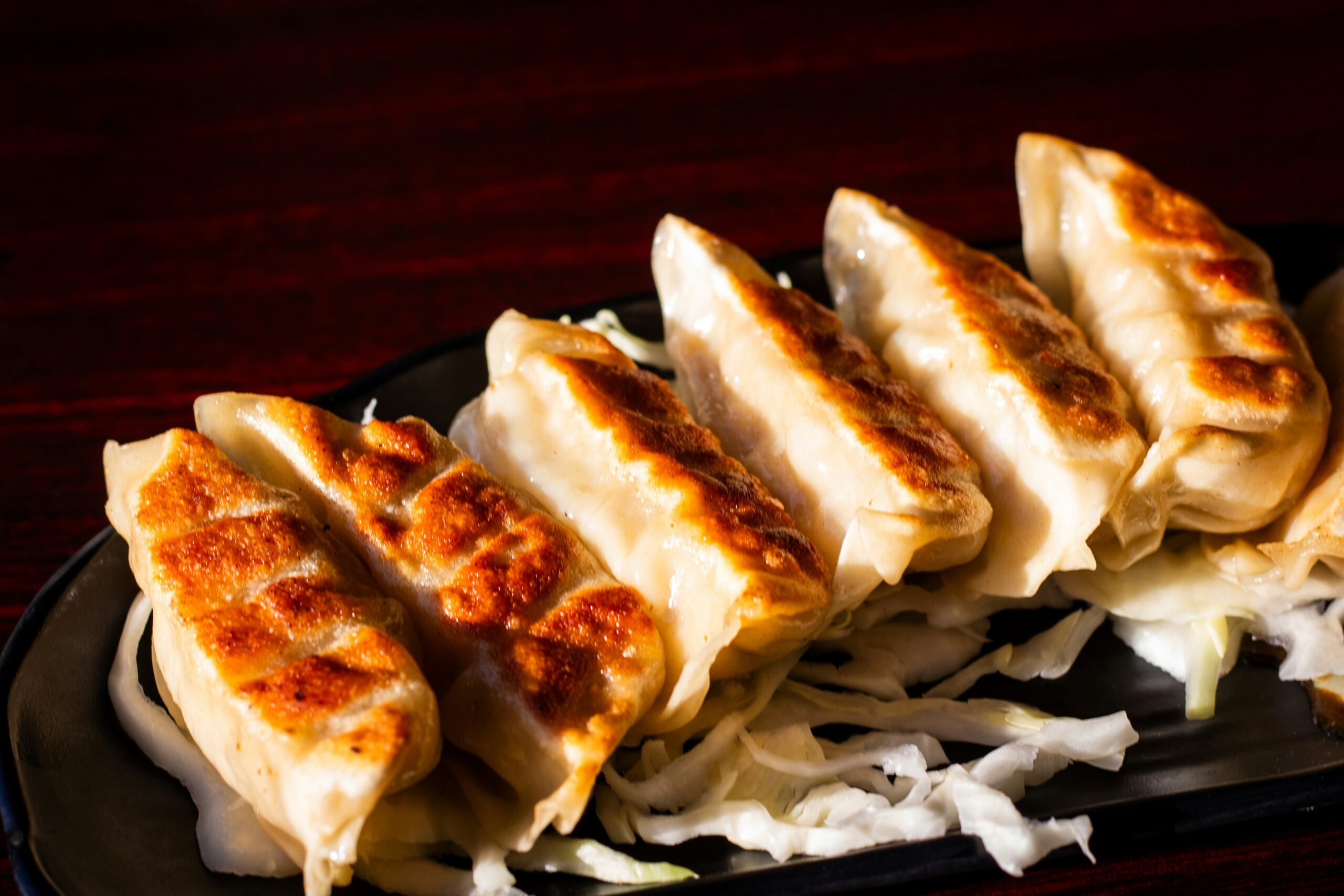
Guotie are the pan-fried cousin of jiaozi, cooked using a two-stage method: fried flat-side down in oil until the base is deeply golden and crisp, then a splash of water is added and the pan is covered to steam the top of the dumpling. The result is a dumpling with two distinct textures — crisp and caramelised on the base, tender on top. In the West, these are commonly called potstickers.
How to eat: Crisp-side up on the plate, dipped in black vinegar and chilli oil. The crisp base is the defining feature — never let them sit too long before eating.
Japanese Dumplings
 Gyoza (餃子)
Origin: Derived from Chinese jiaozi, developed in Japan post-WWII · Cooking method: Pan-fried (yaki-gyoza), boiled (sui-gyoza), or deep-fried (age-gyoza)
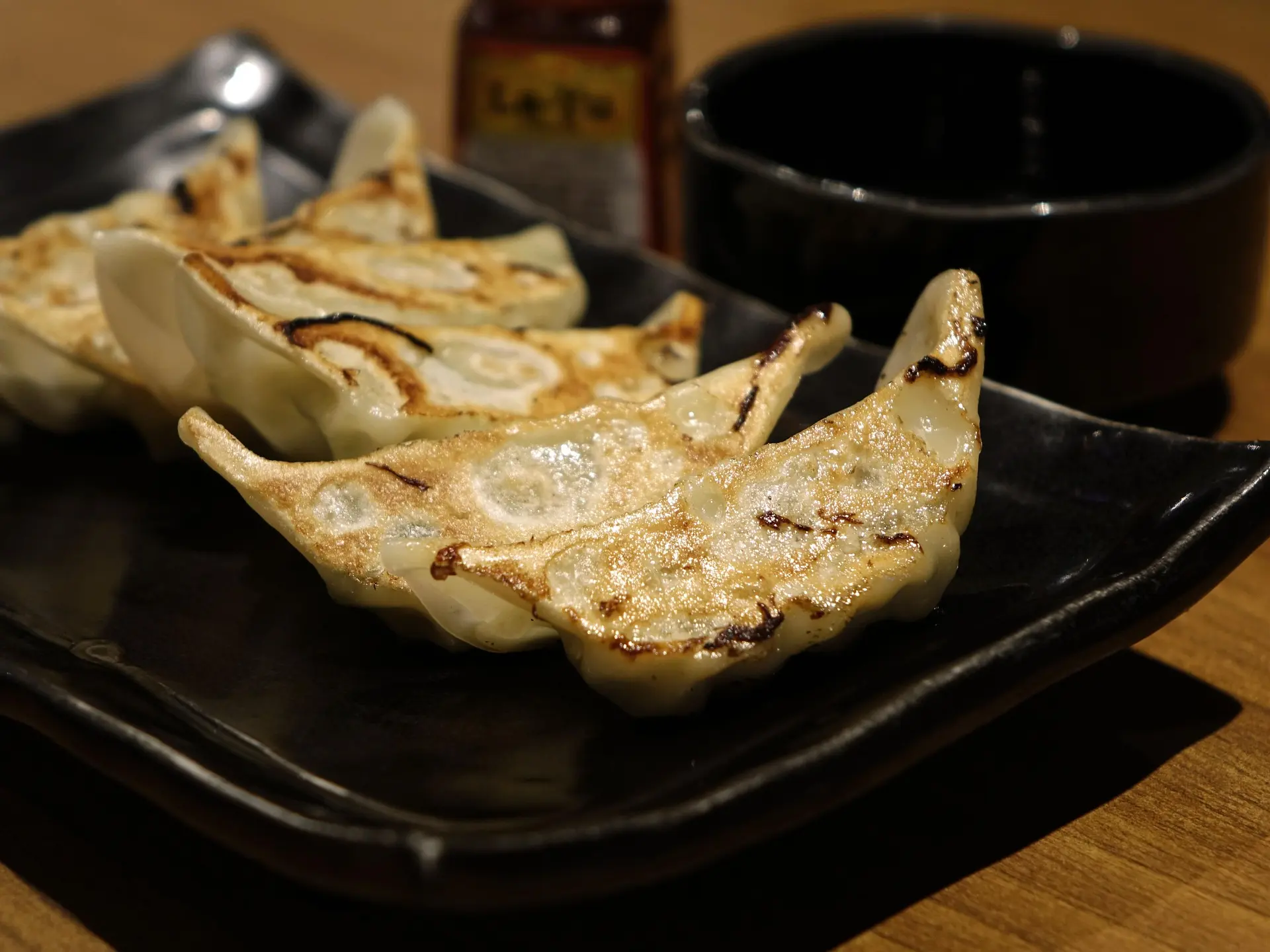
Japan’s adaptation of the Chinese jiaozi, refined over several decades into a distinct dish. Gyoza wrappers are thinner and more delicate than jiaozi; the filling is more finely minced and more heavily garlic-forward. The standard preparation — yaki-gyoza — produces a dumpling with a crisp, golden base and a tender steamed top.
Gyoza are most commonly served as a side dish alongside ramen in Japan, but have become a standalone dish globally. Edinburgh has several Japanese restaurants producing good gyoza.
How to eat: With a dipping sauce of soy sauce, rice vinegar, and chilli oil. Eat in one or two bites — gyoza are designed to be smaller than jiaozi.
Korean Dumplings
 Mandu (만두)
Origin: Korea (influenced by Chinese jiaozi via Mongol contact) · Cooking method: Steamed, boiled, pan-fried, or deep-fried
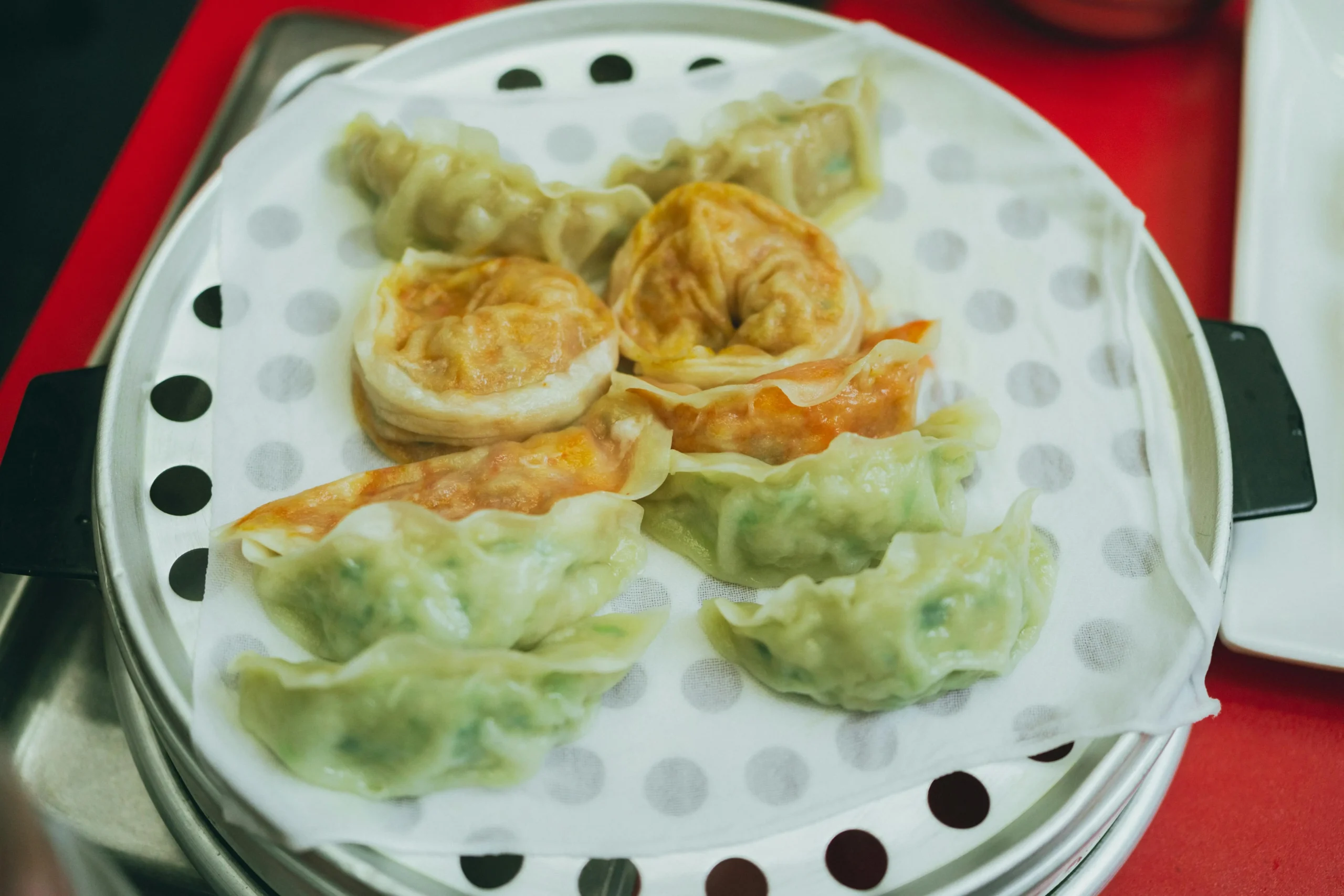
Korean dumplings with a broader, rounder wrapper than Chinese jiaozi, filled with a mixture of pork, tofu, glass noodles, kimchi, and vegetables. The kimchi variety — kimchi mandu — has a pungent, fermented depth that makes it one of the most distinctive dumpling fillings in East Asian cuisine. Mandu are eaten year-round in Korea and have been part of royal court cuisine for centuries.
How to eat: Steamed mandu are eaten with soy sauce and sesame oil. Fried mandu are eaten as a snack. Tteok-mandu-guk — mandu in a rice cake soup — is a traditional New Year dish.
South Asian Dumplings
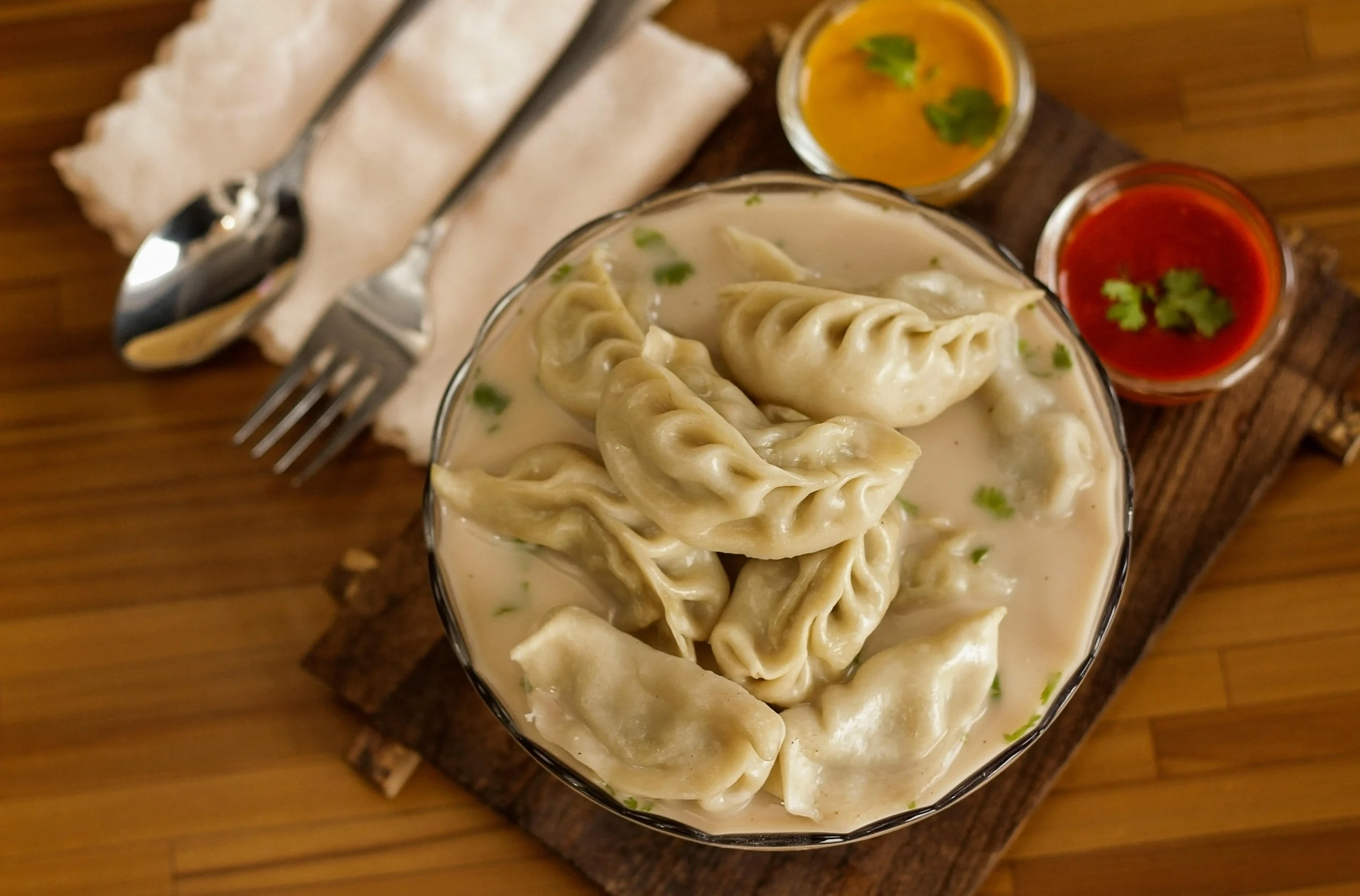
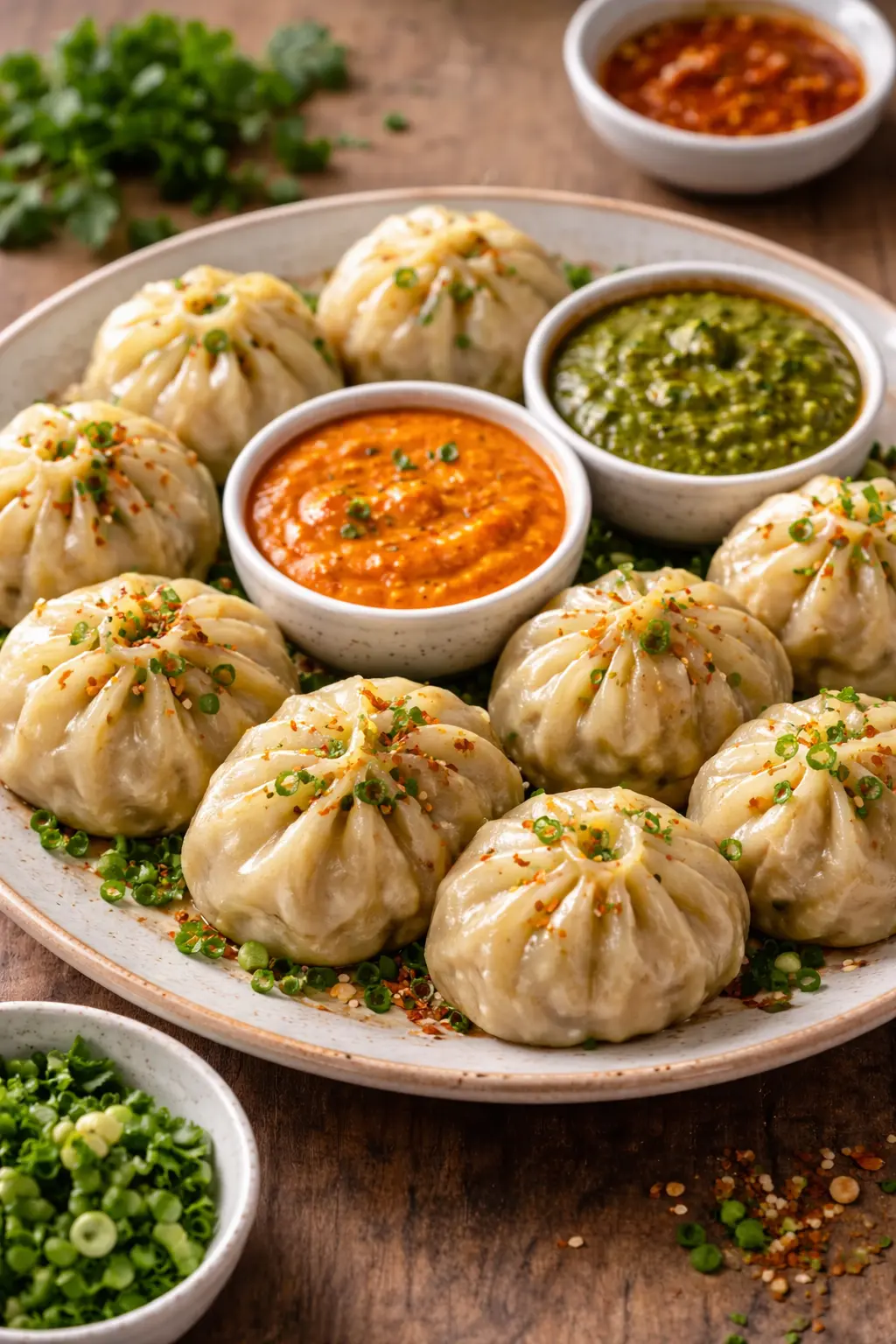 Momo
Momo
Origin: Nepal and Tibet · Cooking method: Steamed, fried, or in soup
Steamed dumplings that are the national food of Nepal and a staple across the Himalayan region. Momos have a thicker, chewier wrapper than Chinese dumplings, and are filled with minced meat (chicken, buffalo, or pork), vegetables, tofu, or paneer, seasoned with ginger, garlic, and warming spices. They are served with a spiced tomato-chilli achar (dipping sauce) that has a heat and complexity absent from most East Asian dipping sauces.
Momos are available in Edinburgh at The Khukuri in Haymarket — see our vegan dumplings guide for details on their vegetarian versions.
How to eat: With the tomato achar, eaten whole in one or two bites. The jhol momo variation — served in a spiced broth — is a particularly comforting preparation.
Central Asian & Caucasian Dumplings
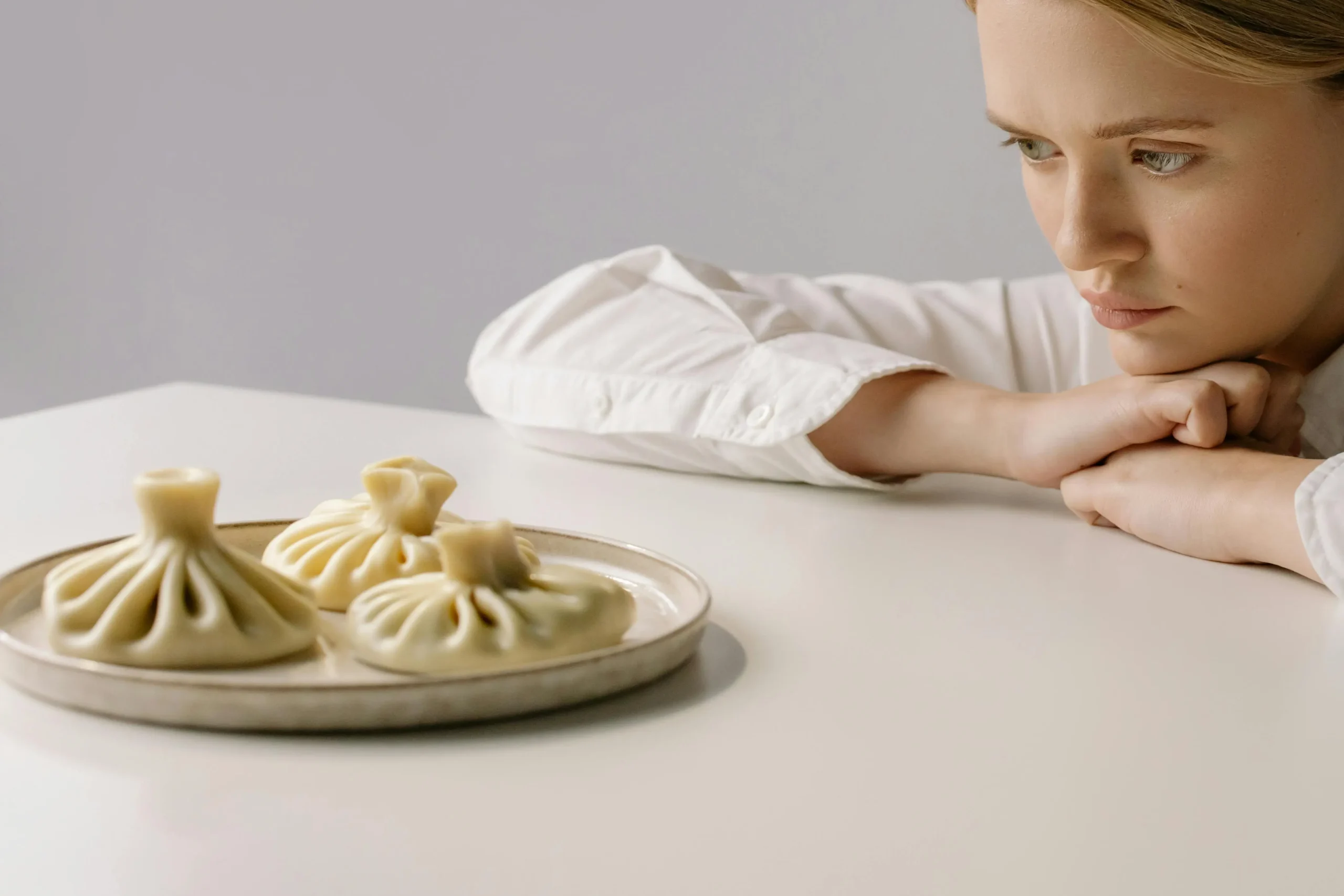 Khinkali (ხინკალი)
Origin: Georgia (mountain regions of Pshavi, Mtiuleti, and Khevsureti) · Cooking method: Boiled
Large Georgian dumplings with a distinctive twisted knot at the top, filled with spiced minced meat (traditionally lamb and beef with onions, chilli, and cumin) and a soup-filled interior similar in concept to xiao long bao but arrived at independently. The knot at the top is a handle — it is not eaten. Khinkali are large enough that two or three constitute a meal.
How to eat: Hold by the twisted top. Bite a small hole in the side. Drink the soup inside before eating the rest of the dumpling. Discard the dry knot at the top — eating it marks you as an amateur. Traditionally eaten by hand, never with cutlery.
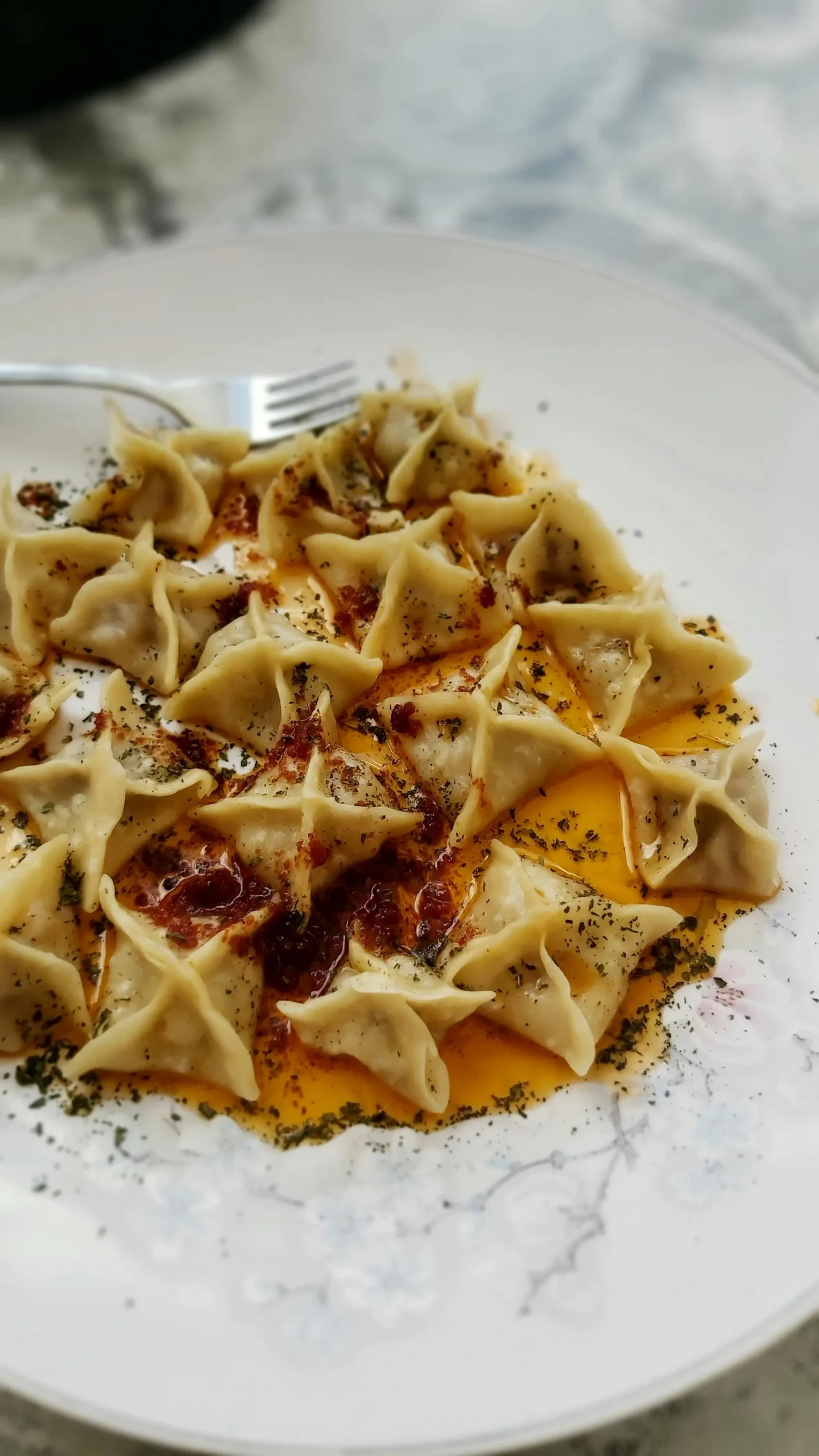 Manti
Manti
Origin: Central Asia (Turkey, Uzbekistan, Kazakhstan, Armenia) · Cooking method: Steamed or boiled
Dumplings found across a vast geographical area from Turkey to western China, varying in size and filling by region. Turkish manti are tiny — sometimes the size of a thumbnail — filled with spiced minced lamb or beef, and served in a pool of garlic yoghurt topped with melted butter and paprika. Central Asian manti are larger, often filled with lamb and pumpkin or beef and onion, and steamed in layered bamboo or metal steamers.
How to eat: Turkish manti are eaten with yoghurt and butter sauce — the combination of the spiced meat filling with cold garlic yoghurt is one of the great flavour contrasts in any dumpling tradition.
European Dumplings
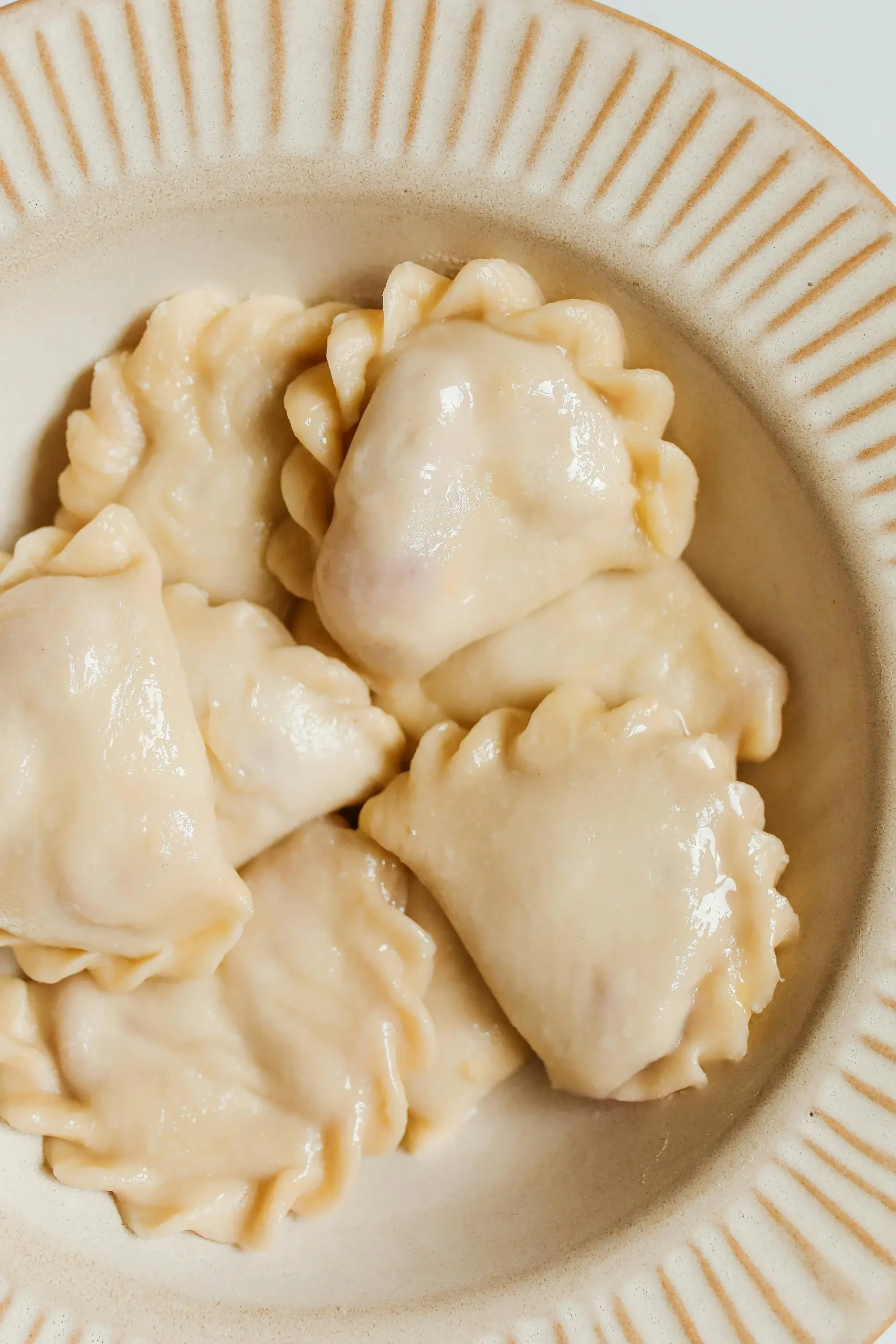 Pierogi
Origin: Poland · Cooking method: Boiled, then optionally pan-fried in butter
Poland’s national dumpling: a thick, crescent-shaped wheat dough wrapper filled with potato and cheese (ruskie), sauerkraut and mushroom, meat, or sweet fruit fillings. Pierogi are first boiled until cooked through, then — in the most satisfying preparation — pan-fried in butter with caramelised onions until the exterior develops a light golden crust.
The potato and cheese filling — technically a combination of mashed potato and twaróg, a fresh Polish curd cheese similar to cottage cheese — is the most widely known and the one most likely to be encountered in Edinburgh’s Polish delicatessens and restaurants.
How to eat: With sour cream and crispy fried onion. Sweet versions are served with sugar and melted butter.
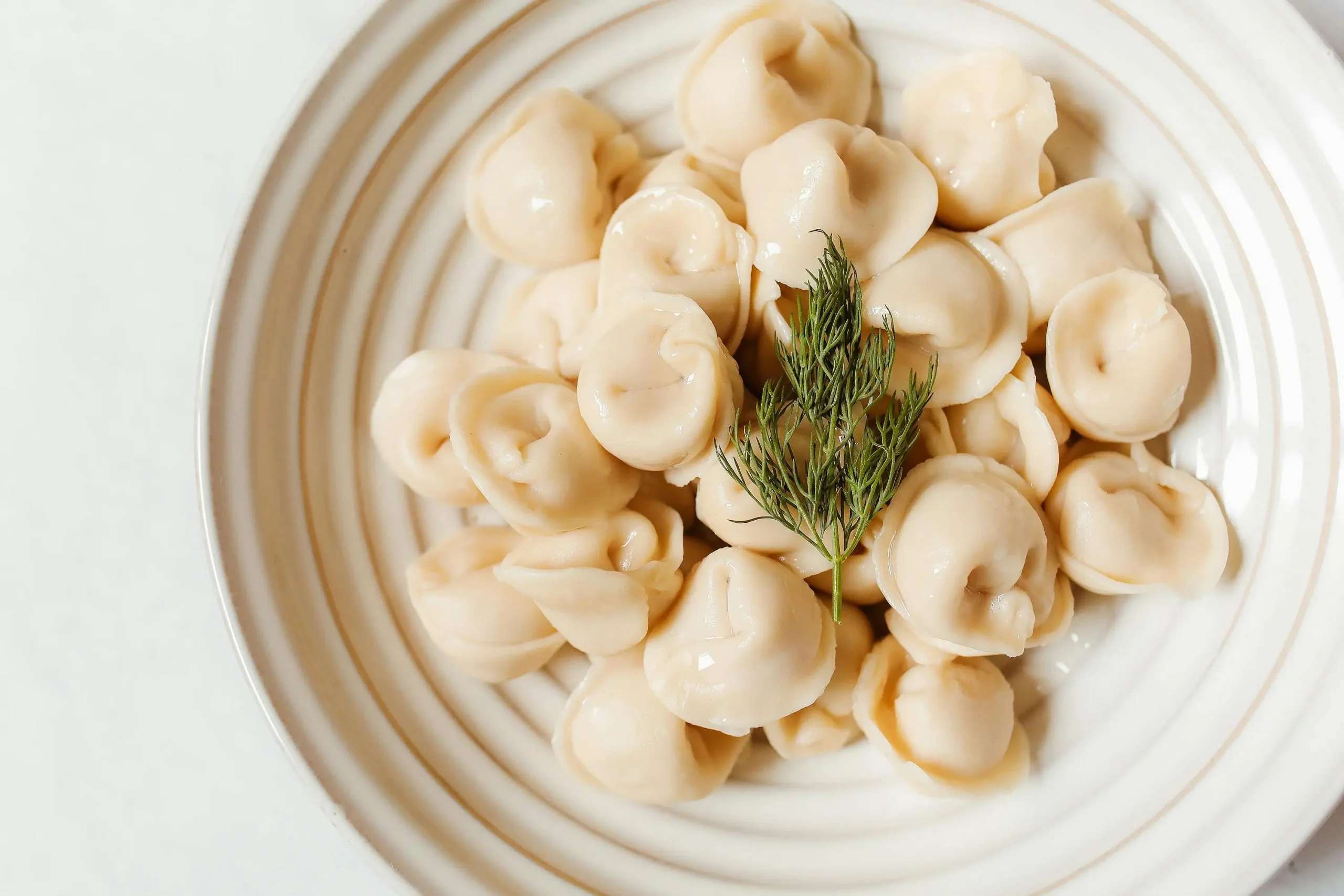 Pelmeni
Origin: Siberia and the Ural region of Russia · Cooking method: Boiled
Small, dense Russian dumplings — similar in shape to tortellini — with a thin wheat wrapper and a raw meat filling (pork, beef, lamb, or a mixture) that cooks entirely during boiling. Unlike pierogi, pelmeni fillings are never sweet and never pre-cooked. They originated as a survival food in Siberia, where the frozen climate allowed them to be stored outdoors for months without spoiling.
How to eat: In broth with dill and sour cream, or tossed in butter with black pepper. Never overcooked — the wrapper becomes unpleasantly thick if left in the water too long.
Dumpling Cooking Methods — Quick Reference
- Boiled: Jiaozi (shuijiao), wonton, pierogi, pelmeni, khinkali, manti. The most straightforward method — produces tender, plump dumplings with a clean flavour.
- Steamed: Xiao long bao, har gow, siu mai, momo, baozi. Produces a delicate, slightly sticky wrapper and preserves filling moisture.
- Pan-fried (potsticker method): Guotie, gyoza, jiaozi (jianjiao). Produces a crisp base with a steamed top — the most textually complex cooking method.
- Deep-fried: Wonton, mandu, age-gyoza. Produces a uniformly crisp, golden shell — a different dish to the same dumpling cooked other ways.
Frequently Asked Questions
What is the difference between a dumpling and a dim sum?
Dim sum (點心) refers to a style of meal — small dishes served over tea in the Cantonese tradition. Many dim sum dishes are dumplings (har gow, siu mai, xiao long bao), but dim sum also includes non-dumpling dishes like char siu bao, cheung fun, and turnip cake. Not all dumplings are dim sum; not all dim sum are dumplings.
What is the most popular type of dumpling in the world?
By volume, Chinese jiaozi are the most widely eaten dumpling globally — they are a staple food for over a billion people in China alone. By international recognition, xiao long bao (soup dumplings) and gyoza have the broadest global following outside their countries of origin.
What types of dumplings can I find in Edinburgh?
Edinburgh’s dumpling scene primarily covers Chinese styles — jiaozi, xiao long bao, guotie, wontons, and dim sum varieties — plus Japanese gyoza and Nepali momos. See our Best Dumplings in Edinburgh guide for the full current picture.
Are all dumplings made with wheat flour?
No. Har gow wrappers use wheat starch (not flour) for their distinctive translucent texture. Momo wrappers are made from plain flour. Some Vietnamese dumplings use rice flour or tapioca starch. Korean tteok (rice cakes, sometimes used in dumpling soups) use glutinous rice flour. The wrapper ingredient significantly affects the texture of the finished dumpling.
Which dumplings are suitable for vegetarians or vegans?
Most dumpling styles have vegetarian variations — vegetable jiaozi, tofu mandu, mushroom gyoza, and veggie momo are all widely available. In Edinburgh, Dumpling Queen X Dai Jou Bu and Five Dumplings on Leith Walk both offer strong plant-based options. For the full guide, see our vegan dumplings Scotland page.
This guide is updated regularly as Dumpling Guide expands its coverage across Scotland. Questions or suggestions? Get in touch with our team.