Dim Sum 101 — A Beginner’s Guide
Dim sum is one of the most convivial eating experiences in the world — small dishes, shared across the table, ordered steadily over the course of a long meal. For first-timers, it can also be bewildering: a trolley of unlabelled steamers, a menu in Cantonese, and the feeling that everyone around you knows something you do not. This guide is designed to remove that feeling.
What Is Dim Sum?
Dim sum (點心) translates roughly as “touch the heart” — small portions of food designed to be eaten in one or two bites, shared across a group. It originates in the teahouse culture of Guangdong (Canton) province in southern China, where travellers along the Silk Road would stop to rest, drink tea, and eat small snacks. The tea component is still important — the tradition is called yum cha (飲茶), meaning “drink tea,” and tea is always ordered first.
Dim sum is traditionally a morning or lunchtime meal. Most Cantonese dim sum restaurants operate their full trolley service only until early afternoon, after which the kitchen switches to a standard evening menu.
The Essential Dishes to Try First
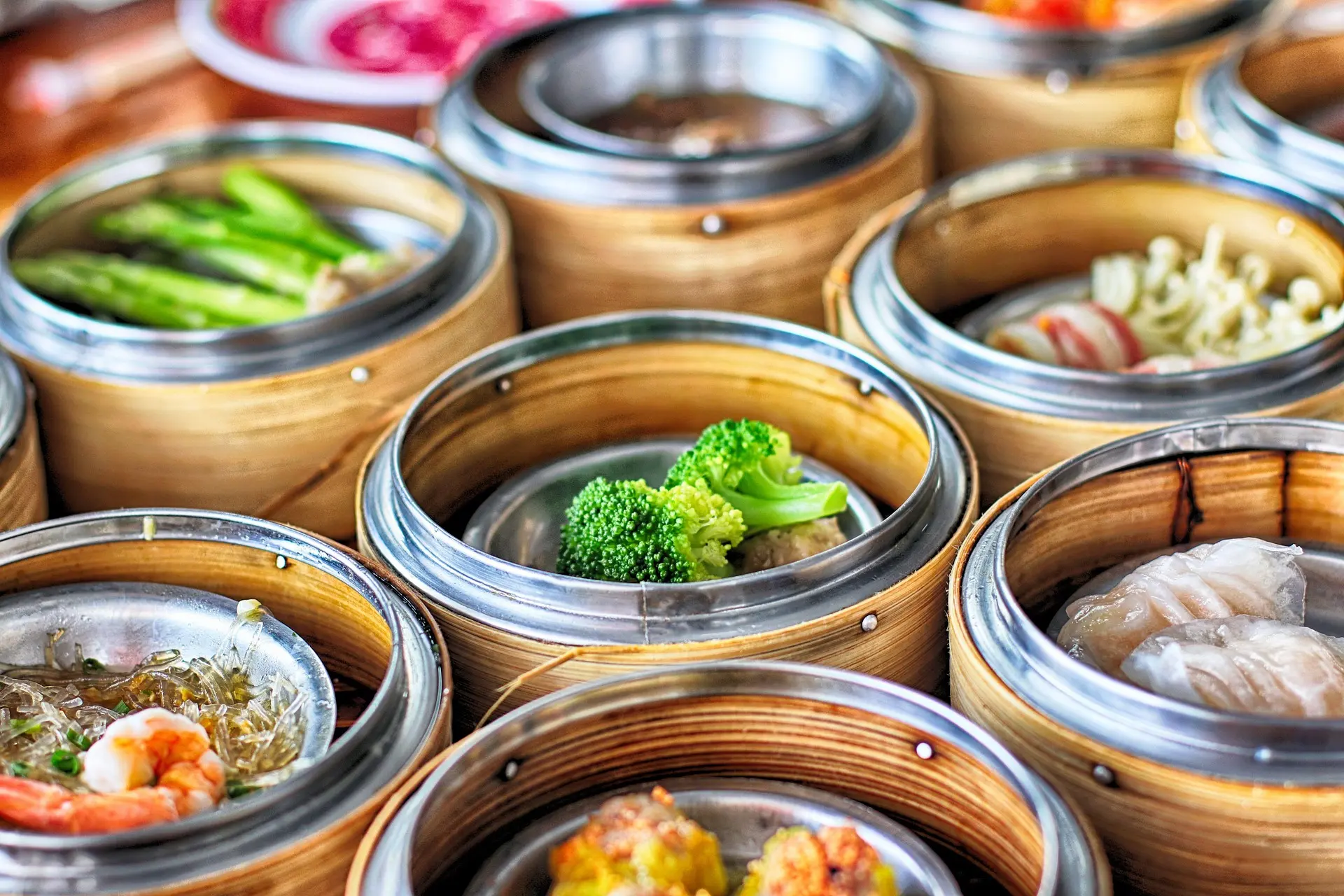
Har gow (蝦餃) — steamed prawn dumplings in a translucent wrapper. These are the benchmark dish by which dim sum kitchens are judged. The wrapper should be thin enough to show the pink prawn through the skin; the filling should be springy and sweet. If the har gow are good, everything else will be too.
Siu mai (燒賣) — open-topped steamed dumplings with pork and prawn, wrapped in a yellow egg-pasta skin. Often topped with a dot of orange roe or a green pea. These are the most recognisable dim sum dish globally and a reliable indicator of kitchen quality.
Char siu bao (叉燒包) — steamed or baked buns filled with barbecue pork. The steamed version is soft and white with a split top; the baked version is glazed and golden. Both are deeply satisfying.
Cheung fun (腸粉) — rice noodle rolls, steamed and filled with prawn, pork, or beef, served with sweet soy sauce. The texture should be silky and tender — one of the most pleasurable textural experiences in Chinese cooking.
Turnip cake (蘿蔔糕) — pan-fried slices of a steamed cake made from shredded turnip and rice flour. Crisp outside, soft inside, often served with a light chilli sauce.
How to Order
In traditional dim sum restaurants, dishes arrive by trolley. You stop the trolley, point to what you want, and the server stamps your order card. In more modern or smaller restaurants, ordering is done from a paper or digital menu. Order in rounds rather than all at once — dishes come from the kitchen at different times and it is better to manage the table space.
A reasonable approach for a first visit is to order two to three dishes per person, eat them, then decide whether to continue. Dim sum is meant to be extended — there is no pressure to rush.
Tea Etiquette
Always order tea. Chrysanthemum, pu-erh, and jasmine are the most common choices — each pairs differently with the food. When someone pours tea for you, tap two fingers lightly on the table as a gesture of thanks (a tradition that originates from an imperial court custom). When your teapot needs refilling, leave the lid slightly open — this signals the server without requiring you to interrupt the meal.
For the best dim sum and dumpling options available in Edinburgh right now, see our Edinburgh dumplings guide.